East Mallorca Diving Guide
An overview of scuba diving along the Llevant coast — Mallorca's eastern shoreline of coves, harbours and limestone headlands — and why Porto Cristo is a sensible base to dive from.
The Llevant coast: an overview
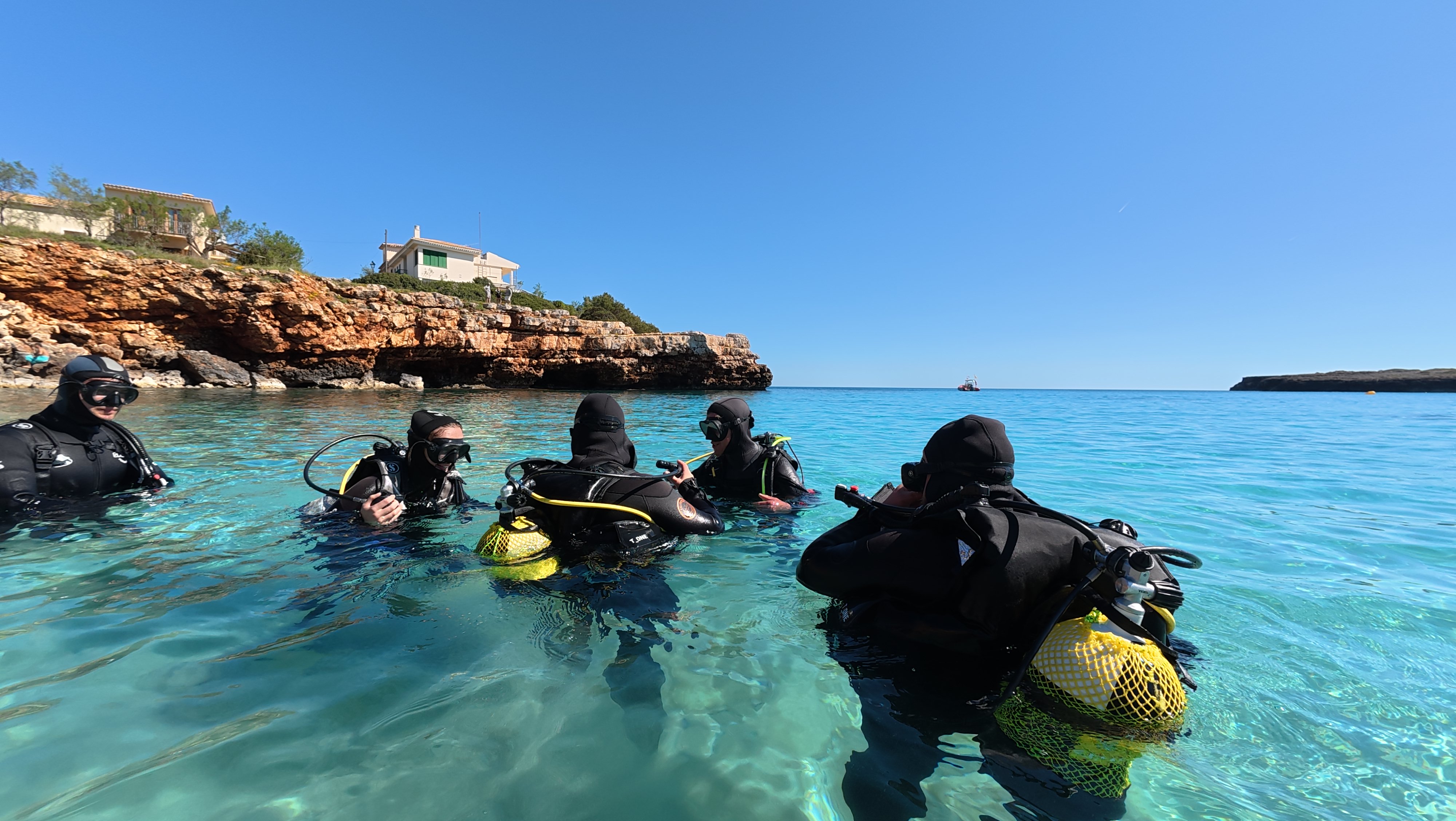
Mallorca’s east coast — often referred to as the Llevant coast — runs from the bays around Alcúdia in the north down past Porto Cristo and on toward the southeast of the island. Rather than one continuous beach, it’s shaped into a series of coves (calas), small harbours and headlands cut into limestone bedrock, interspersed with the sandy-beach resort towns that have grown up around many of these inlets.
For scuba diving on Mallorca’s east coast, this geography matters: the limestone produces varied underwater terrain (more on that below), and the natural harbours provide sheltered access points for dive boats that aren’t available along long open beaches.
Topography: cliffs, caverns and seagrass meadows
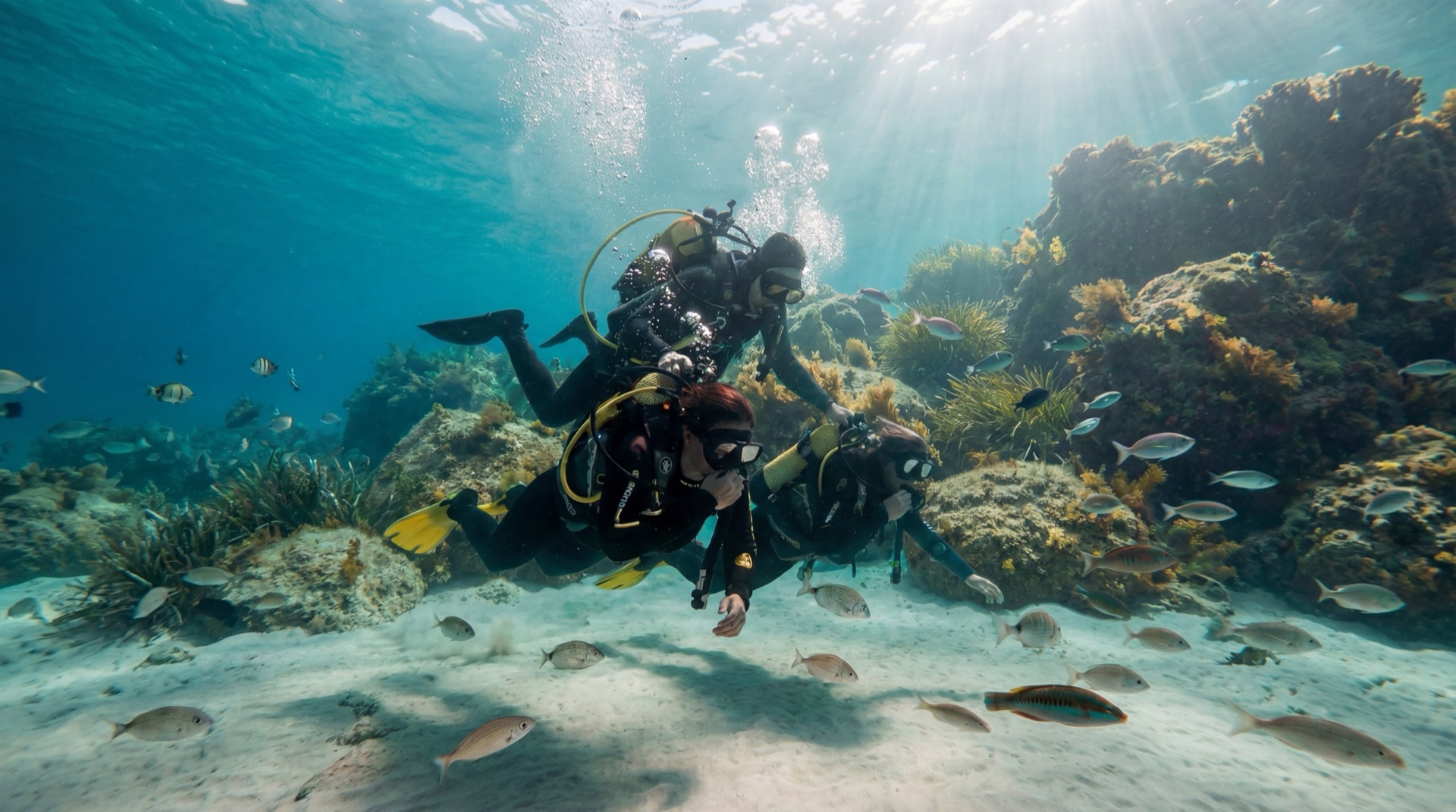
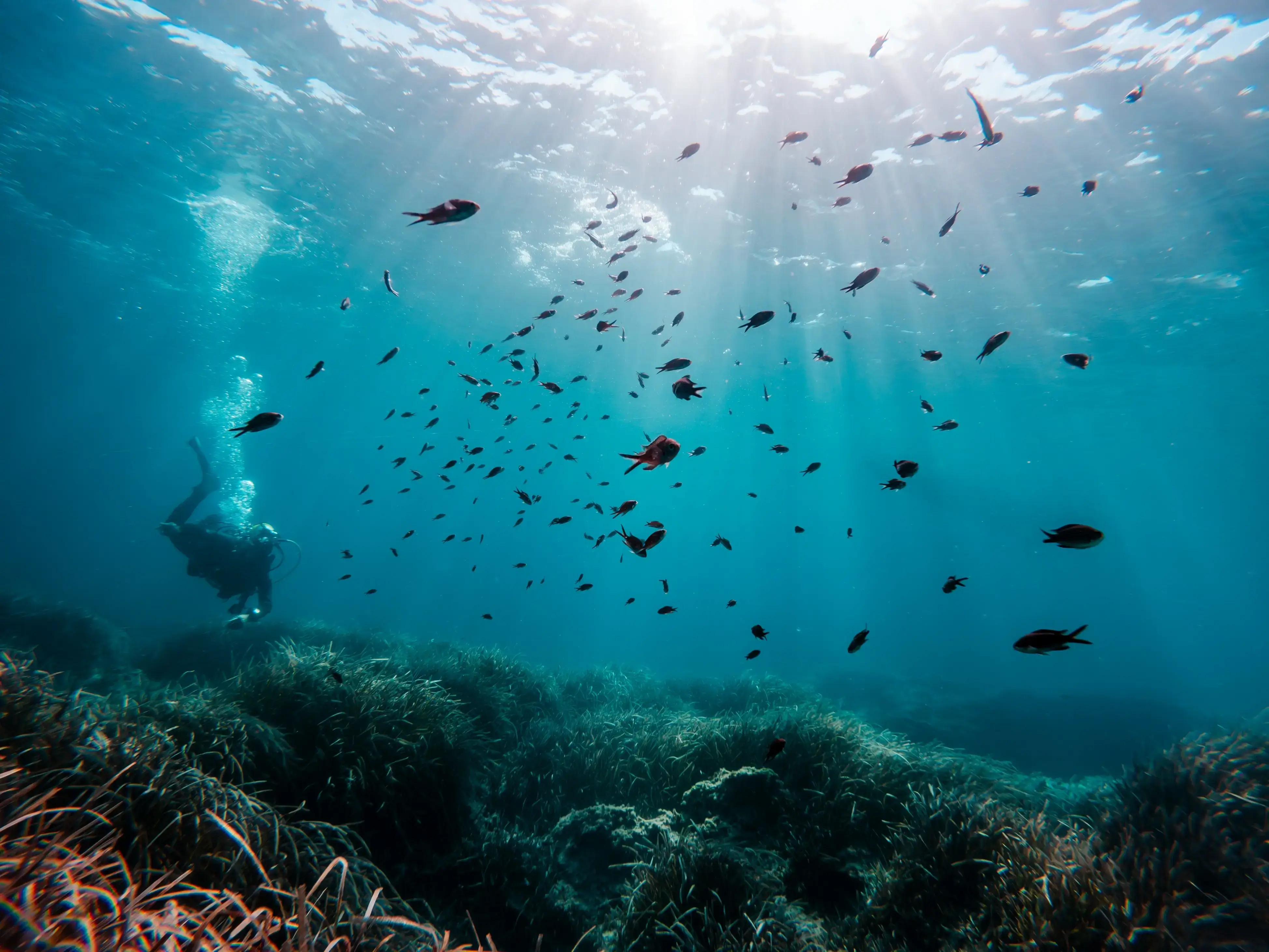
Underwater, the limestone geology that shapes the visible coastline continues below the surface — rocky walls, boulder fields, ledges and, in places, caverns, arches and short tunnels carved by the sea over time. Closer to shore and in many of the coves, the seabed often gives way to shallower plateaus covered in Posidonia oceanica, the seagrass meadows that are a defining feature of the wider Mediterranean and an important habitat for marine life.
For more detail on the kinds of sites this terrain produces, see dive sites around Porto Cristo.
Seasons and conditions
Like the rest of the Mediterranean, this coast has a clear diving season: water temperatures, visibility and weather patterns shift from spring through to autumn, with most diving activity concentrated in the warmer months. For a month-by-month look at what to expect, see our diving conditions guide.
Choosing Porto Cristo as your base
Of the towns along this coast, Porto Cristo stands out for one practical reason: it has a working, sheltered harbour with a local dive operator running both beginner and certified diving activities. Many of the resort towns nearby — Cala Millor, Cala Romàntica, Cala Mendia, Cala Anguila, Sa Coma and S’Illot — are within a short drive, which means that wherever you’re staying along this stretch of coast, Porto Cristo is a realistic place to base your diving plans even if it isn’t your accommodation.
Porto Cristo is also home to the Coves del Drac, one of Mallorca’s best-known attractions — see diving near the Drach Caves if you’re combining the two.
Recommended dive center
Skualo Porto Cristo
Porto Cristo, Mallorca
- PADI 5 Star Dive Center
- Based in Porto Cristo, close to the harbour
- Boats moored close to the dive centre
- Professional facilities: showers, parking, changing rooms and safety boxes
- Small-group approach
- Professional local guides
- Established local operator with a strong reputation
We mention Skualo because their facilities and range of activities make them a sensible first stop for diving locally. Availability and conditions on the day determine what’s possible.
FAQ
Frequently asked questions
What's the difference between diving on the east coast and elsewhere on Mallorca?
Mallorca's coastline varies considerably by region — the west and northwest tend toward dramatic cliffs and deeper water close to shore, while the east (the Llevant coast) is characterised by a series of coves, inlets and harbours cut into limestone. This guide focuses on the east coast specifically because that's where Porto Cristo, our recommended base, is located.
Is one part of the east coast better for diving than another?
The geology and general character of the coast is fairly consistent along this stretch, so the choice of where to dive often comes down to which town you're staying in and how far you're willing to travel. Porto Cristo's harbour gives it a practical advantage as a base, regardless of which resort town you're visiting from.
Do I need a car to dive on the east coast?
It depends on where you're staying. If you're based in Porto Cristo itself, you likely won't need one. If you're staying in a nearby resort town, a car makes things easier, though some areas are within walking or short taxi distance — see our individual area guides for specifics.
When is the best time of year to dive here?
The diving season on this coast generally runs from spring through autumn, with conditions varying month to month. See our diving conditions guide for a fuller seasonal breakdown.
Nearby resorts
Nearby areas this guide also covers
Staying along the coast? These guides cover the short trip from nearby resort towns.
Diving Near Cala Millor
Staying in Cala Millor? Porto Cristo is a short drive down the coast and offers harbour-based beginner and certified diving options.
Diving Near Cala Romàntica
Based around Cala Romàntica or S'Estany d'en Mas? Porto Cristo's dive centre and harbour are a short trip away for beginner and certified diving.
Diving Near Cala Mendia & Cala Anguila
Cala Mendia and Cala Anguila sit just along the coast from Porto Cristo, making it an easy base for a beginner or certified dive during your stay.
Diving Near Sa Coma & S'Illot
Visitors to Sa Coma and S'Illot can reach Porto Cristo in a short drive, gaining access to harbour-based scuba diving for beginners and certified divers.
Continue reading
Related guides
Dive Sites
An overview of the type of dive sites found around Porto Cristo and Mallorca's east coast, from rocky reefs to caverns, arches and walls.
Diving Conditions
Seasonal water temperatures, typical visibility, wetsuit guidance and how weather affects diving plans around Porto Cristo and the east coast.
Complete Diving Guide
Everything you need to know about scuba diving in Porto Cristo: beginner experiences, certified boat dives, dive sites, conditions, and how to plan your trip.